Find IP67 Home Balcony Solar System for Residential, Commercial, and Industrial
Source 30 verified listings for the IP67 Home Balcony Solar System designed for residential, commercial, and industrial applications. Buyers can compare specifications, certifications, and pricing to identify the optimal solution for their energy needs.
Key considerations
Products List


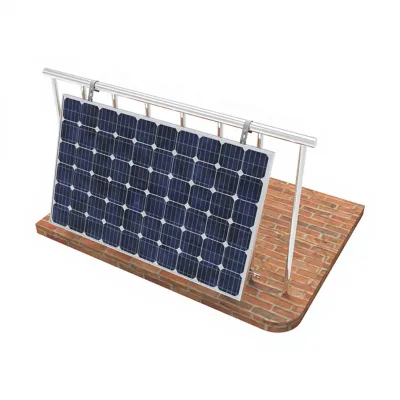
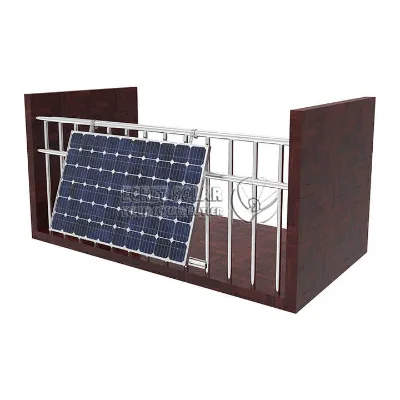


Advanced off Grid Solar System: Perfect Solar Home System for Families
$1000.00 - $1150.00
MOQ: 1 Sets

off Grid Solar System: Premium Solar Home System for Energy Independence
$1000.00 - $1150.00
MOQ: 1 Sets


Efficient Solar Home System for Household with 4LED Lights 2solar Panels
$30.00 - $30.60
MOQ: 500 Sets


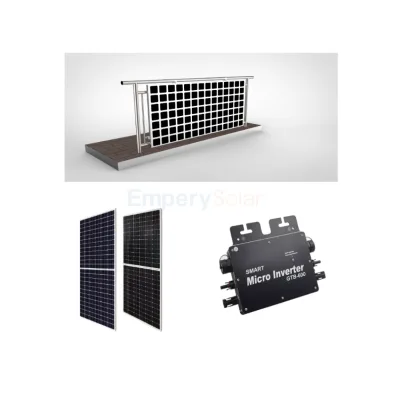


Solar Home System with 5W Solar Panel Solar Kit for Indoor and Outdoor
$13.00 - $13.50
MOQ: 1000 Pieces

Comprehensive Sourcing Guide
Strategic Sourcing Guide for IP67 Home Balcony Solar Systems
Understanding the Technical Architecture and Core Specifications
When sourcing an IP67 Home Balcony Solar System, buyers must first distinguish between the structural mounting components and the integrated electrical generation units. The provided market data indicates a diverse range of product attributes, suggesting that "balcony solar system" is a category encompassing both standalone mounting brackets and complete plug-and-play energy units. A critical observation from the available product facts is the variation in material composition. While some listings specify "Aluminum Alloy" generally, others explicitly cite "AI6005-T5," a high-strength aluminum alloy commonly used in structural applications for its corrosion resistance and weight-to-strength ratio. For a balcony environment, where wind loads and exposure to the elements are significant, the selection of AI6005-T5 or equivalent high-grade aluminum is a primary technical requirement.
The electrical architecture of these systems varies significantly in the current market. Buyers should verify the specific system type, as the data shows options ranging from "On-Grid Solar System" to "Off-Grid Solar System" and "Hybrid Solar System." The output voltage is a crucial specification, with observed ranges spanning "110V-240V," indicating compatibility with various regional grid standards. Furthermore, the solar panel type is not uniform; listings reference both "Monocrystalline Silicon" and "Polycrystalline Silicon." Monocrystalline panels typically offer higher efficiency in limited balcony spaces, making them a preferred choice for residential applications where square footage is constrained. The controller type is another variable, with "MPPT" (Maximum Power Point Tracking) and "PWM" (Pulse Width Modulation) both appearing in the data. For a high-efficiency home system, MPPT controllers are generally superior in maximizing energy harvest under varying light conditions.
The physical dimensions and load-bearing capacities are equally critical for balcony installations. The data lists specific specifications for mounting structures, such as lengths of "2.1m/2.2m/3.1m/3.2m/4.1m/4.2m," which can be customized. Structural integrity is validated by wind load ratings, with some products citing a capacity of "60m/s," and snow load ratings of "1.4KN/M²." These figures represent the engineering limits of the mounting system and must be cross-referenced with local building codes and regional weather patterns. The IP67 rating, central to the search query, implies a high level of protection against dust and temporary immersion in water, a necessity for outdoor balcony units exposed to rain and humidity.
Compliance, Certification, and Regulatory Standards
Navigating the certification landscape is a non-negotiable aspect of sourcing a solar system for residential use. The market data reveals a fragmented certification landscape, with products holding various combinations of standards. Some listings cite "CE, TUV, ISO, GB," while others reference "ASNZS1170/Gamcorp/MCS/Intertek/SPAD" or "CE, CB, ISO." This variance highlights the importance of verifying that the specific unit intended for purchase carries the certifications required by the buyer's local jurisdiction. For instance, "CE" indicates conformity with health, safety, and environmental protection standards for products sold within the European Economic Area, while "GB" suggests compliance with Chinese national standards.
For buyers in Australia or New Zealand, the "ASNZS1170" standard is particularly relevant, as it covers structural design loads. Similarly, "MCS" (Microgeneration Certification Scheme) is a critical benchmark in the UK for ensuring that solar installations meet quality and safety requirements for grid connection. The presence of "Intertek" and "SPAD" in the data suggests third-party testing and verification services, which add a layer of trust to the product's claimed performance. However, buyers must not assume that a supplier offering one set of certifications automatically provides all others. The procurement strategy must involve a direct request for the specific certification documents relevant to the destination country.
The product standard "M1B-W1150" and "1" are also listed, though their specific technical definitions require clarification from the supplier. In the context of solar mounting, standards often relate to the mechanical design and load testing protocols. The "GB" standard mentioned is a domestic Chinese standard, which may not be sufficient for export markets without additional international certifications. Therefore, a robust compliance check involves verifying that the product possesses the necessary electrical safety certifications (like CE or CB) and structural integrity certifications (like ASNZS1170 or TUV) for the specific installation site.
Cost Drivers and Economic Factors in Procurement
The economic landscape for balcony solar systems is characterized by a wide disparity in pricing and minimum order quantities (MOQ). The observed listed price range in the market data spans from $0.04 to $3,731 USD. This extreme range indicates that the category includes both individual components, such as small brackets or single panels, and complete, high-capacity systems. The lower end of the price spectrum likely corresponds to the "Aluminum Alloy" brackets or basic mounting hardware, while the higher end reflects full systems with batteries, inverters, and high-efficiency panels.
Minimum Order Quantity (MOQ) is another significant cost driver, with observed ranges from 1 to 10,000 units. For a single home buyer or a small residential project, an MOQ of 10,000 is prohibitive, whereas an MOQ of 1 allows for the procurement of a single complete unit. The "Selling Units" are listed as "Single item," which supports the feasibility of small-scale purchases. However, buyers must be aware that unit costs often decrease with volume. If a buyer is sourcing for a multi-unit development, negotiating an MOQ closer to the higher end of the range could yield significant per-unit savings.
Additional cost factors include the "Surface Treatment" and "Customization" options. The data notes "Anodized" surface treatment, which enhances corrosion resistance and longevity but may add to the manufacturing cost. "Customization" is marked as "Available," suggesting that buyers can request specific dimensions or configurations, which typically incurs a premium over standard stock items. The "Warranty" period also influences the total cost of ownership; while some products offer a "12Years" warranty, others list "<5 Years." A longer warranty often correlates with higher initial costs but reduces long-term risk. Finally, the "Delivery Time" of "10-30" days and the "Type of Shipping" (Sea Freight/Air Freight/Land Transportation) will impact the final landed cost, with air freight being significantly more expensive than sea freight for heavy items like solar brackets.
Typical Applications and Installation Scenarios
The application scope for these systems is diverse, ranging from "Home" and "Balcony" to "Commercial, Home, Industrial" and "Solar roof system, ground system." The specific "Product name" of "Balcony Solar System" suggests a niche application designed for urban residential environments where traditional roof space is unavailable. The "Installation Site" data confirms versatility, noting compatibility with "Solar roof system" and "ground system," which implies that the mounting hardware can be adapted for various surfaces. However, for a balcony application, the "Mounting Type" is likely a specialized rail or clamp system designed to attach to balcony railings or walls without penetrating the waterproof membrane.
The "Pre-sales project design" is marked as "Y" (Yes), indicating that suppliers are willing to provide engineering support to ensure the system fits the specific balcony geometry. This is a crucial service for balcony installations, where space constraints and structural limitations are more severe than on open ground. The "Free installation service" is listed as "No," which means buyers should budget for professional installation or possess the technical expertise to install the system themselves. The "Work Time (h): 24 Hours" attribute is somewhat ambiguous in this context; it may refer to the operational capability of the system or the supplier's support hours, but it does not necessarily imply the system generates power 24 hours a day without storage.
The "Battery Type" is identified as "Lithium Ion," which is essential for off-grid or hybrid systems to store energy for use during non-sunny periods. The "Load Power (W): 10 kW" figure represents a high-capacity system, likely exceeding the needs of a typical single balcony, suggesting that the data aggregates both small residential units and larger commercial-scale solutions. Buyers must carefully match the "Load Power" and "Output Voltage" to their specific energy consumption needs and the electrical capacity of their building's infrastructure.
Supplier Evaluation and Quality Assurance Protocols
Evaluating suppliers for balcony solar systems requires a rigorous approach to quality assurance. The "Place of Origin" is consistently listed as "China," with "Fujian, China" specifically mentioned. While this indicates a manufacturing hub, it does not guarantee quality. Buyers should verify the supplier's production capabilities and quality control processes. The "Condition" of the products is listed as "New," but this is a baseline expectation. More importantly, the "Single gross weight" of "1.000 kg" for a "Single package size" of "26X21X19 cm" provides a tangible metric for verifying the density and material quality of the components.
The "prod_packing" details, including "Shrinking Film, Carton, Wooden Pallet or by Custom," are critical for logistics and damage prevention. A supplier that offers robust packaging options demonstrates a commitment to product integrity during transit. The "Customization" availability suggests that the supplier has flexible manufacturing lines, but buyers should ensure that custom orders do not compromise the standard quality checks. The "Warranty" terms, ranging from "<5 Years" to "12 Years," serve as a proxy for the supplier's confidence in their product's durability. A 12-year warranty is a strong indicator of high-quality materials and manufacturing processes.
When evaluating suppliers, buyers should request detailed test reports for the "Wind Load" and "Snow load" ratings. The data cites "60m/s" for wind load and "1.4KN/M²" for snow load, but these figures must be backed by third-party testing certificates. The presence of certifications like "TUV" and "Intertek" is a positive signal, but the buyer must ensure these certifications are current and specific to the product model being purchased. Additionally, the "Model Number" variations, such as "EG-TR-MR40" or "YDSES-001," should be used to track specific product iterations and ensure consistency in quality across orders.
Long-Term Procurement and Lifecycle Management
Sourcing a balcony solar system is not merely a transactional purchase but an investment in long-term energy generation. The "Warranty" period is a primary indicator of the product's expected lifecycle. A "12 Years" warranty suggests a design life that aligns with the typical degradation rate of solar panels, whereas a "<5 Years" warranty may indicate a shorter lifespan or a lower-quality component mix. Buyers should also consider the "Surface Treatment" of "Anodized" aluminum, which provides long-term protection against corrosion, a critical factor for outdoor balcony installations exposed to rain and salt air.
The "System Type" (On-Grid, Off-Grid, Hybrid) dictates the long-term maintenance and operational strategy. Hybrid systems offer the flexibility to store energy, reducing reliance on the grid and providing backup power, but they require battery management and replacement over time. The "Battery Type" being "Lithium Ion" is a positive sign for longevity, as these batteries generally have a longer cycle life than lead-acid alternatives. However, buyers should verify the cycle life and depth of discharge specifications to ensure the battery meets their long-term energy storage needs.
The "Delivery Time" of "10-30" days and the "Type of Shipping" options (Sea Freight/Air Freight/Land Transportation) impact the procurement timeline. For urgent projects, air freight may be necessary, but for cost-sensitive projects, sea freight is preferable. The "Customization" aspect allows for future-proofing the system, enabling buyers to adapt the system to changing energy needs or building modifications. Finally, the "Pre-sales project design" service ensures that the system is correctly sized and configured from the outset, reducing the risk of costly retrofits or underperformance in the long term. By carefully analyzing these factors, buyers can make informed decisions that balance immediate costs with long-term value and reliability.
FAQs
What certifications are required for home balcony solar systems?
Products typically hold CE, TUV, ISO, and GB certifications. Some listings also include ASNZS1170, MCS, or Intertek verification. Buyers must verify that the specific unit carries the certifications required by their local jurisdiction before purchasing.
Which aluminum alloy is used for balcony solar brackets?
The system commonly utilizes AI6005-T5 aluminum alloy. This high-strength material offers excellent corrosion resistance and a superior weight-to-strength ratio. It is essential for structural integrity in balcony environments exposed to wind and weather.
Can the system operate as an off-grid or hybrid solution?
Yes, the system supports On-Grid, Off-Grid, and Hybrid Solar System configurations. It includes Lithium Ion batteries for energy storage. This flexibility allows users to generate power independently or connect directly to the main electrical grid.
How much wind load can the mounting structure withstand?
The mounting structure is rated to withstand wind loads up to 60m/s. It also supports a snow load of 1.4KN/M². These engineering limits must be cross-referenced with local building codes and regional weather patterns for safety.
What is the typical delivery time for these solar systems?
The standard delivery time ranges from 10 to 30 days. Shipping methods include Sea Freight, Air Freight, or Land Transportation. Buyers should account for these transit times when planning their installation schedule.
Is customization available for the balcony solar system specifications?
Customization is available for specifications such as length and dimensions. Options include sizes like 2.1m, 2.2m, 3.1m, and others. Buyers can request specific configurations to fit unique balcony geometries.